
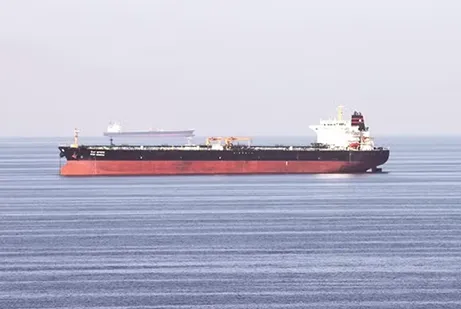
The ongoing conflict in West Asia has evolved from a geopolitical event into a geoeconomic shock with direct consequences for global markets. Its ripple effects are being felt across economies, reinforcing a deeper structural shift in the global order.
Geoeconomics is no longer a subset of geopolitics; it is fast becoming its primary language.
This shift was evident in a recent PAFI dialogue, where discussions underscored the close interdependence of geopolitical developments and economic outcomes. At the centre of this transformation lies West Asia—the most consequential geoeconomic flashpoint today. The region’s centrality to global energy supply and critical trade routes ensures that instability transmits rapidly, affecting oil prices, logistics networks, and market confidence. What was once perceived as a regional crisis now has systemic global implications.
For India, the stakes are particularly high.
India’s economic linkages with West Asia are deep and multi-dimensional. Bilateral trade is estimated at approximately $100 billion annually, while remittances from Indians working in Gulf economies contribute $40–50 billion each year—accounting for a significant share of total inflows. These flows underpin consumption, external sector stability, and broader economic confidence. Prolonged instability in the region, therefore, has the potential to disrupt not only energy supplies but also trade flows, remittances, and business sentiment, with effects likely to persist over the medium term.
Energy remains the most immediate channel of vulnerability. India imports over 80 per cent of its crude oil requirements, making it highly sensitive to global price movements. Changes in crude prices directly impact inflation, fiscal balances, and the current account deficit. Recent volatility has already raised concerns about external sector stability. A sustained increase in oil prices could widen the current account deficit, exert pressure on foreign exchange reserves, and complicate macroeconomic management.
India enters this phase with relatively stable macroeconomic fundamentals. Prudent fiscal management and improved policy credibility have created buffers that allow for calibrated responses to external shocks. However, stability should not be mistaken for insulation. External sector pressures will require continuous monitoring and policy agility.
At the same time, a deeper structural reset is underway.
The global economic system is fragmenting. The era of efficiency-led globalisation is giving way to one characterised by resilience, security, and strategic alignment. Geopolitical tensions are increasingly influencing trade flows, technology partnerships, and investment decisions. Countries are prioritising supply chain security, domestic manufacturing capacity, and control over critical sectors such as energy, semiconductors, and minerals. Defence spending is rising, and economic policy is becoming more closely intertwined with national security considerations.
Multilateral institutions are struggling to respond effectively to these shifts, contributing to a more fragmented and less predictable global environment. This is not a temporary disruption—it is a reordering of the global economic system.
In such a world, the question is not whether disruption will occur, but how countries position themselves within it.
For India, this presents both risk and opportunity.
On one hand, India remains vulnerable to external shocks through energy dependence, trade linkages, and capital flows. On the other, the reconfiguration of global supply chains presents a rare opportunity to transition from a participant in global systems to a more central and trusted node within them.
Strategic autonomy will be crucial in navigating this transition. India’s capacity to engage across geographies, diversify partnerships, and retain policy flexibility provides a strong foundation. However, strategic autonomy must be anchored in domestic strength through investments in energy security, manufacturing capability, and institutional resilience.
Resilience, therefore, must evolve from a defensive concept into a strategic capability.
This has significant implications for Indian industry. Businesses can no longer treat geopolitics as an external risk to be managed at the margins. It must be embedded into core strategy through supply chain diversification, geographic risk balancing, and more sophisticated risk management frameworks that incorporate geopolitical and regulatory scenarios.
At the same time, this moment presents an opportunity. As global supply chains realign, Indian industry can position itself not merely as an alternative but as an anchor, particularly in sectors where scale, trust, and policy support can converge. This will require sustained investment in competitiveness, technology adoption, and integration into global value chains.
Equally critical is the role of public policy professionals. In a geoeconomic world, policy cannot remain reactive; it must be anticipatory. This requires aligning industry priorities with national strategy, enabling coordination across sectors, and ensuring agility in response to rapidly evolving global conditions.
Three priorities stand out.
First, accelerating energy diversification to reduce vulnerability to external shocks.
Second, building globally competitive manufacturing ecosystems that can integrate into and anchor supply chains.
Third, strengthening policy coordination to respond swiftly and coherently to geoeconomic disruptions.
Encouragingly, India’s macroeconomic fundamentals remain relatively stable, and investor confidence continues to be supported by credible policy frameworks. This positions India as a relatively resilient economy in an uncertain global environment.
However, the risks are real and persistent. Geoeconomic disruptions are no longer episodic—they are becoming structural features of the global system.
For India, this is a defining moment.
If India 1.0 was about building and India 2.0 about growth, India 3.0 must be about leadership—confident, strategic, and rooted in domestic strength. Leadership that enables India not only to adapt to a changing global order but also to help shape it.
The choices made today—on energy, trade, industrial policy, and global engagement—will determine whether India merely navigates disruption or converts it into long-term strategic advantage.
Ajay Khanna is the co-founder, Public Affairs Forum of India (PAFI). The views expressed are personal
