
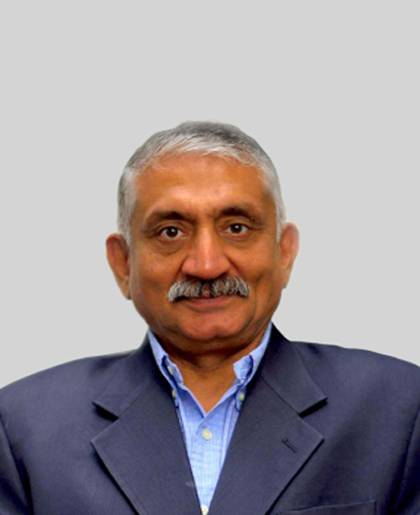
Ajay Khanna, founder, PAFI on AI-enabled policy engagement, India's global positioning, the capabilities public affairs professionals need and the importance of building enduring institutions.
As India assumes a more prominent role in the global economic and geopolitical landscape, public affairs has an increasingly important role to play in fostering understanding between businesses, governments and society. In this two-part interview with PRWeek India managing editor Rohan Moorthy, Ajay Khanna, founder of the Public Affairs Forum of India (PAFI), discusses how artificial intelligence can enable more informed policy engagement, what it takes to build a business-friendly policy ecosystem, and how India can strengthen its engagement with global stakeholders.
PRWeek: With social media, digital platforms and artificial intelligence (AI) accelerating the flow of information, how must stakeholder engagement evolve?
Ajay Khanna: Technology has transformed the speed, scale and channels through which organisations communicate. Stakeholders have more opportunities to participate in conversations that were once largely confined to institutional settings. Organisations can no longer rely exclusively on periodic meetings, formal representations or established institutional networks. They need to listen continuously, understand emerging concerns and engage with a broader range of stakeholders.
Yet I would hesitate to suggest that the foundations of traditional engagement have become outdated. Technology can accelerate communication, but it cannot replace trust. Digital platforms can expand reach, but they do not automatically create understanding.
PRWeek: Could AI also make policy conversations more inclusive?
Khanna: AI can help interpret information, but it cannot substitute for human judgement, empathy or the patience required to build enduring relationships. AI can support research, identify emerging trends, improve access to information and help organisations assess complex policy questions. It may also create opportunities to include perspectives that have traditionally been underrepresented. However, these technologies can also amplify misinformation and misleading narratives. AI-generated analysis must therefore be subject to verification, transparency and human judgement. Organisations must remain accountable for the information they use and the positions they advocate.
Information is not the same as wisdom, and technological capability is not a substitute for professional integrity. The future lies in combining the reach and intelligence of new technologies with the enduring disciplines of dialogue, preparation, credibility and personal engagement.
PRWeek: As India's economic and geopolitical influence grows, what does the country need to communicate more effectively to global investors, businesses and policymakers?
Khanna: Few generations have had the privilege of witnessing a transformation as profound as India's over the past four decades. We have moved from a tightly regulated economy to one of the world's most dynamic and aspirational markets, from looking inward to engaging confidently with the world, and from being largely a participant in global conversations to increasingly helping shape them.
India's achievements in economic reform, digital public infrastructure, financial inclusion, infrastructure development and innovation demonstrate the potential of thoughtful public policy. However, India must communicate not only the scale of its opportunities, but also the depth of its institutional capabilities and the direction of its long-term ambitions. Global investors and policymakers need to understand India as a complex, evolving and increasingly influential economy, with its own development priorities, institutional realities and strategic perspectives.
PRWeek: What else should India’s policy makers keep in mind?
Khanna: International engagement should not simply involve presenting India's achievements or attracting investment. It should also involve listening to global perspectives, learning from international experiences and building partnerships grounded in mutual respect. As India's global influence expands, the ability to build trust across governments, businesses and institutions will become an increasingly important national capability.
Ultimately, India's most compelling narrative will rest on the credibility of its institutions, the consistency of its engagement and the opportunities it creates for enterprise, innovation and society.
PRWeek: What makes a policy ecosystem genuinely business-friendly?
Khanna: A genuinely business-friendly policy ecosystem is about much more than the quantity of regulation. Good public policy must create the conditions in which enterprise can flourish, investment can grow, innovation can thrive and society can benefit meaningfully. Regulation has an important role in protecting the public interest, ensuring fair competition and creating a predictable operating environment. The question is not simply whether there is more or less regulation, but whether it is thoughtful, proportionate, transparent and responsive to changing realities.
Businesses value predictability, consistency, institutional clarity and opportunities to engage constructively with policymakers. Governments, meanwhile, must balance economic growth with wider societal responsibilities.
PRWeek: Is it primarily about reducing regulation, or is the answer more complex?
Khanna: The most effective policy environments are those in which governments and businesses see themselves not as opposing interests, but as participants in a larger process of national development. This requires continuous dialogue, evidence-based policymaking and mutual understanding. Public affairs has an important responsibility to bridge these perspectives, ensuring that business realities are understood without losing sight of broader public objectives.
PRWeek: What capabilities will the next generation of public affairs professionals need?
Khanna: I am particularly optimistic about the next generation entering public affairs. The profession attracts talented individuals from diverse academic and professional backgrounds, bringing fresh perspectives, intellectual curiosity and a strong sense of public purpose. Their careers will unfold in a considerably more complex world. They will need to understand public policy and regulation, as well as geopolitics, economics, technology, artificial intelligence, sustainability, business strategy and the expectations of an increasingly informed society.
Analytical ability, strategic thinking and the capacity to interpret complex external developments will become increasingly important. They must also learn to communicate across disciplines and institutions, understanding both the language of business and the language of public policy. But when young professionals ask me which qualities matter most, I believe the conversation must begin with character. Integrity, credibility, curiosity, empathy, humility, patience and sound judgement are qualities that no amount of technical expertise can replace.
PRWeek: What lessons have you learnt about building institutions that can outlast their founders?
Khanna: Policy can be learnt, technical knowledge acquired and networks built. Trust, however, has to be earned every single day. I hope the next generation will define professional success not by the number of doors they can open, but by the number of bridges they can build. This belief in building bridges also informs my thinking about institutions.
Eighteen years ago, when a small group of us came together to establish the Public Affairs Forum of India (PAFI), our ambition was not simply to create another organisation. It was to strengthen a profession that was still searching for its identity. We believed India needed a credible, ethical and non-partisan platform where people working at the intersection of business, government and society could exchange perspectives and contribute to better public policy.
PRWeek: What would you say is the key to great institution building?
Khanna: Enduring institutions are rarely built around individuals. They are built around shared purpose, values and the confidence of the communities they serve. Their continued relevance depends on developing future leadership, welcoming diverse perspectives and ensuring that founding principles remain meaningful across generations.
Ultimately, institution-building is about stewardship rather than ownership. Leadership will change and circumstances will evolve, but an institution's commitment to its purpose must endure. The true measure of its success is whether it leaves the profession and the wider ecosystem stronger than it found them. After all, institution-building is not merely about creating organisations. It is about nurturing ideas, preserving values, developing leadership and building trust that can endure long after the founders have stepped aside.
Ultimately, institution-building is about stewardship rather than ownership. Leadership will change and circumstances will evolve, but an institution's commitment to its purpose must endure.
Ajay Khanna is the Founder, Public Affairs Forum of India (PAFI). The views expressed are personal
